
Analytical Balance
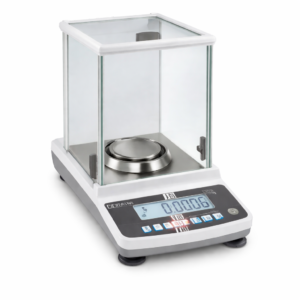
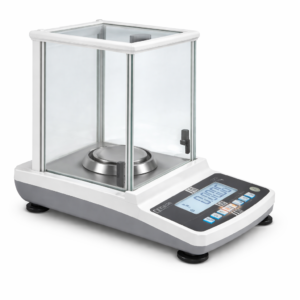
An analytical balance is a highly sensitive laboratory instrument used to measure mass with extreme precision. It can detect very small differences in weight, often up to 0.1 mg (0.0001 g) or finer. The balance is typically enclosed in a glass case to prevent disturbances from air currents and dust, ensuring accurate and reliable measurements. It is mainly used in laboratories where exact mass determination is critical.
High-Precision Measurement
Accurately measures small masses up to 0.1 mg or 0.01 mg for precise lab work.
Draft Shield Enclosure
Glass case prevents air currents and dust from affecting measurements.
Digital Display
Easy-to-read digital readout ensures clarity and accuracy.
Taring Function
Subtracts container weight to measure only the sample.
Calibration System
Internal or external calibration ensures consistent accuracy.
Fast Response & Auto-Stabilization
Quick readings with automatic stabilization for efficiency.
| Parameter | Specification |
| Capacity (100–300 g) | Maximum weight the balance can measure accurately |
| Readability (0.1 mg / 0.01 mg) | Smallest weight difference it can detect |
| Calibration ( Internal / External) | System used to maintain weighing accuracy |
| Display (Digital LCD) | Digital screen for clear readings |
| Draft Shield (Glass enclosure) | Glass enclosure to block air disturbance |
| Pan Size (Ø 80–100 mm) | Size of the weighing platform |
| Power Supply (220–240 V AC) | Electrical input required for operation |
| Compliance (ISO / GMP) | Conforms to lab quality standards |